The Perinatal Culture and Leadership Programme has helped maternity and neonatal teams across the West of England move from understanding safety culture to actively improving it. Our 2024 to 2026 programme summary report shares the work delivered with all five local perinatal leadership teams, including how culture work is now embedded within wider maternity and neonatal safety, Martha’s Rule and system safety programmes.
The programme was a national NHS England initiative designed to strengthen perinatal leadership and support a positive, compassionate culture of safety and continuous improvement across maternity and neonatal services. It responded directly to learning from national maternity reviews, including Ockenden and Kirkup, which highlighted the impact of leadership, culture, teamworking and poor organisational learning on safety.
In the West of England, Health Innovation West of England supported local Trusts to build on the original phases of the programme. We worked with perinatal leadership teams to develop improvement plans, strengthen local capability, and connect culture work with existing quality, safety and governance priorities rather than creating a separate programme of work.
Although the formal Perinatal Culture and Leadership Programme has ended, its work continues through wider maternity and neonatal safety programmes, Martha’s Rule, PSIRF and system safety improvement.
How the programme worked
The national programme was delivered in three connected phases:
Phase 1: Perinatal leadership team development
This phase supported senior perinatal leadership teams, often known as Quads, to build trust, strengthen relationships and develop a shared purpose for leading culture change.
Phase 2: Safety culture insight
Trusts were offered the SCORE safety culture survey. This helped teams understand “how it feels to work here” and identify strengths, opportunities and the relational factors that influence safety and improvement.
Phase 3: Cultural conversations and improvement planning
Independent culture coaches supported teams to discuss their survey findings, make sense of the results and agree locally relevant improvement priorities.
Health Innovation West of England then provided ongoing support from April 2024. This included quality improvement coaching, local facilitation, peer learning events, training, site visits, support for culture action plans and alignment with wider patient safety programmes.
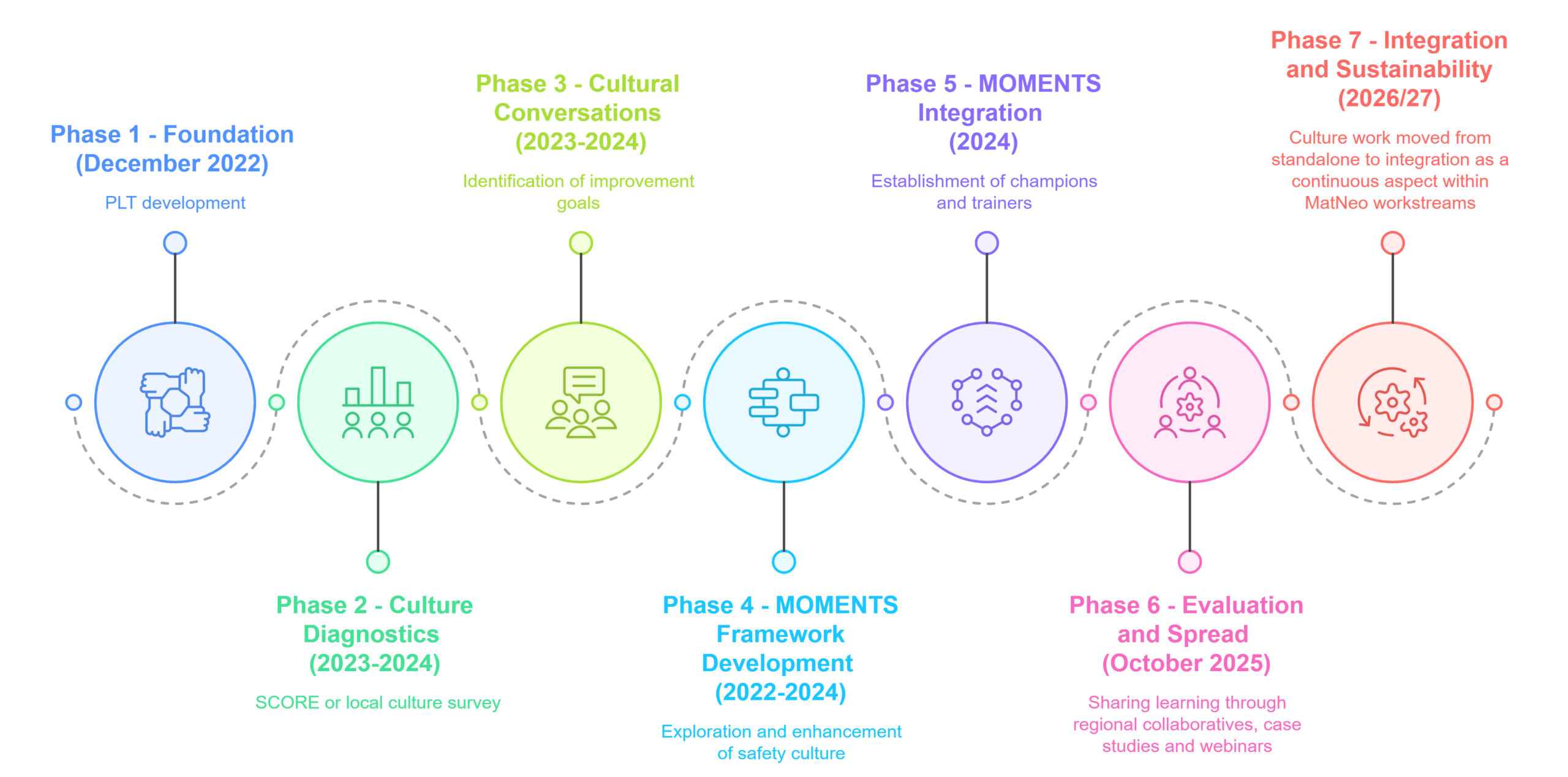
View the Perinatal Culture and Leadership Programme phases image.
What we delivered in the West of England
Across 2024 to 2026, all five local Trusts engaged with the programme. Support was tailored to each organisation’s context, recognising that Trusts were at different stages of their culture improvement journey.
Delivery included:
- in-person events to support peer learning and networking
- quality improvement coaching and executive coaching
- Developing Leaders sessions for perinatal leadership teams
- local Culture Coach and MOMENTS training
- integration of MOMENTS into emergency skills training and education
- support to align culture work with maternity incentive requirements
- collaboration with South West and Wessex Health Innovation Networks
- national sharing of learning through MOMENTS and Perinatal Culture and Leadership Programme communities of practice
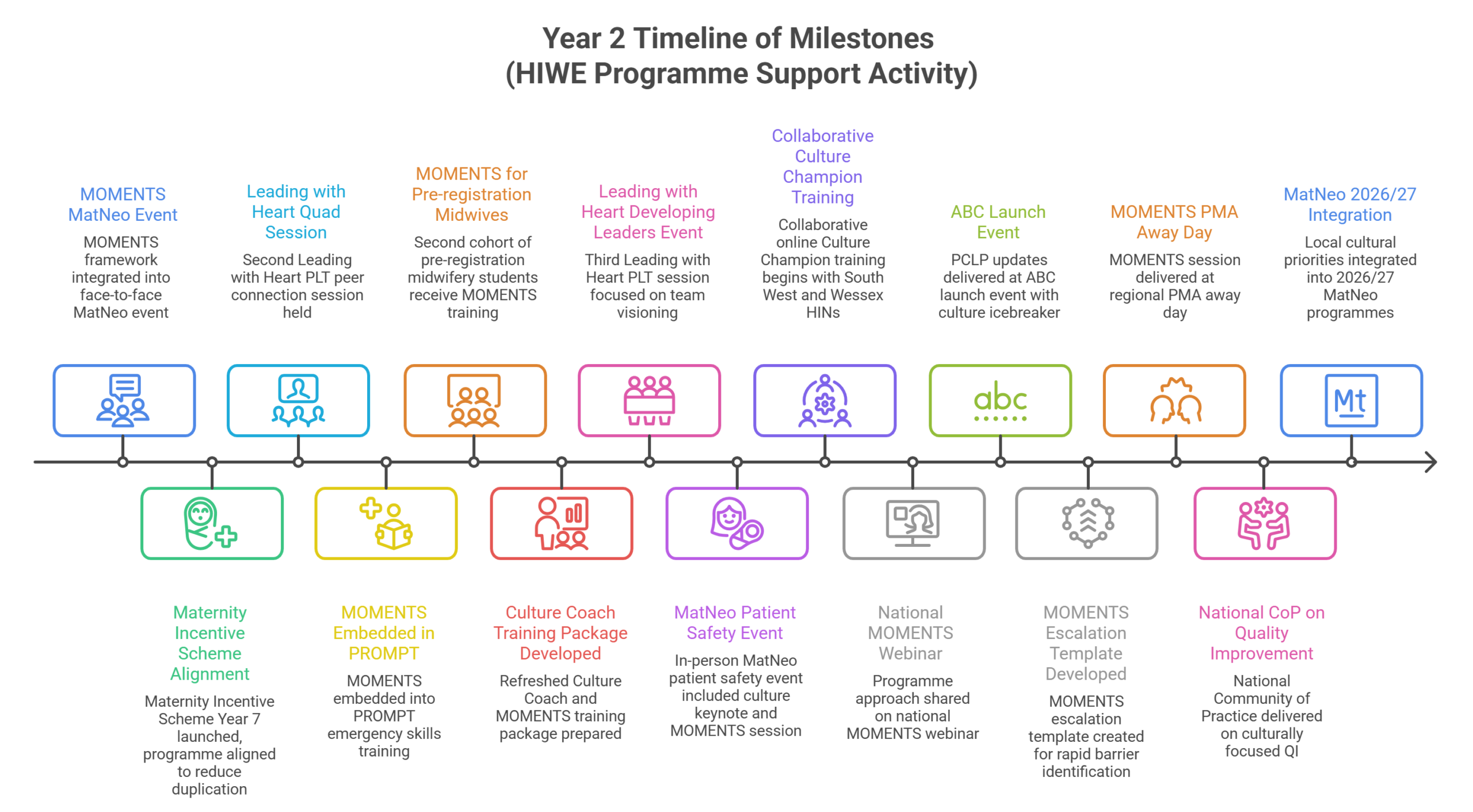
By year two, the focus had shifted from analysing culture to taking action. This included developing local trainers, embedding reflective conversations into existing education and safety structures, and using qualitative insights from teams to shape local priorities.
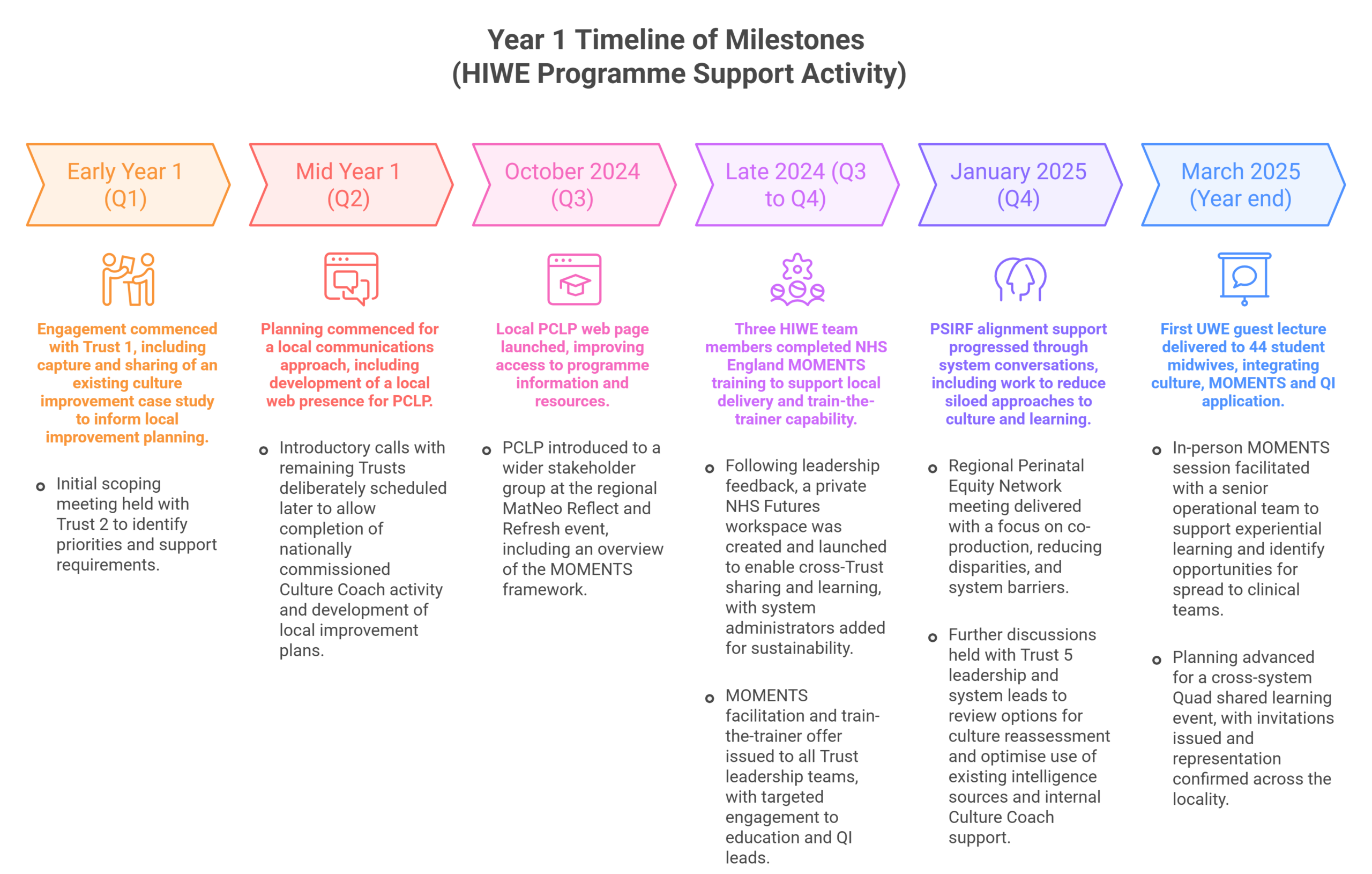
View PCLP year 1 timeline graphic
View PCLP year 2 timeline graphic
Embedding culture into everyday practice
A key legacy of the programme is that culture work is no longer seen as a standalone activity. It is now being integrated into everyday clinical practice, education, simulation, incident learning and quality improvement.
This has been supported through the use of the MOMENTS framework. MOMENTS stands for Meanings, Competencies and Materials in Everyday Team Safety. It is a practical tool that helps teams explore how safety culture is shaped through everyday activities, such as handovers, escalation, team communication and emergency drills.
The framework helps teams move beyond asking “what went wrong?” to exploring how work happens in real life. It supports structured, psychologically safe conversations about the tools, skills, relationships, assumptions and behaviours that influence care.
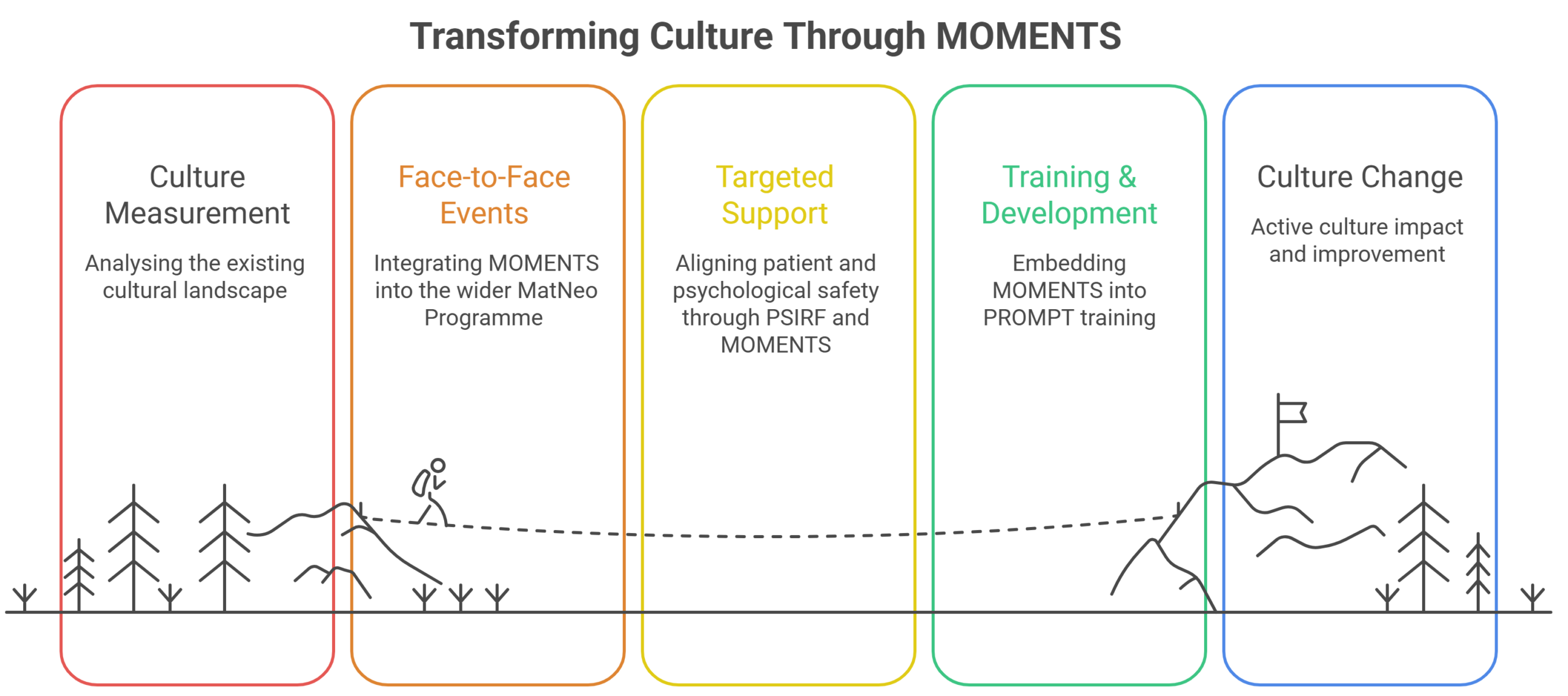
View the transforming culture through moments graphic
In the West of England, MOMENTS has been used in:
- Practical Obstetric Multi-Professional Training (PROMPT) sessions
- emergency skills drills
- escalation and deterioration conversations
- cardiotocography escalation scenarios
- pre-registration midwifery education
- quality improvement away days
- culture coach training
Gill Travers was the only workstream lead from the Health Innovation Networks to be invited to share learning, our approach and how we had utilised MOMENTS across the patient safety programmes, and in innovative forums, at a national webinar in December 2025, facilitated by the research team at the University of Leicester who developed the MOMENTS framework.
For MOMENTS resources, please visit: https://moments-safety.com/
Culture Coaches: building local capability
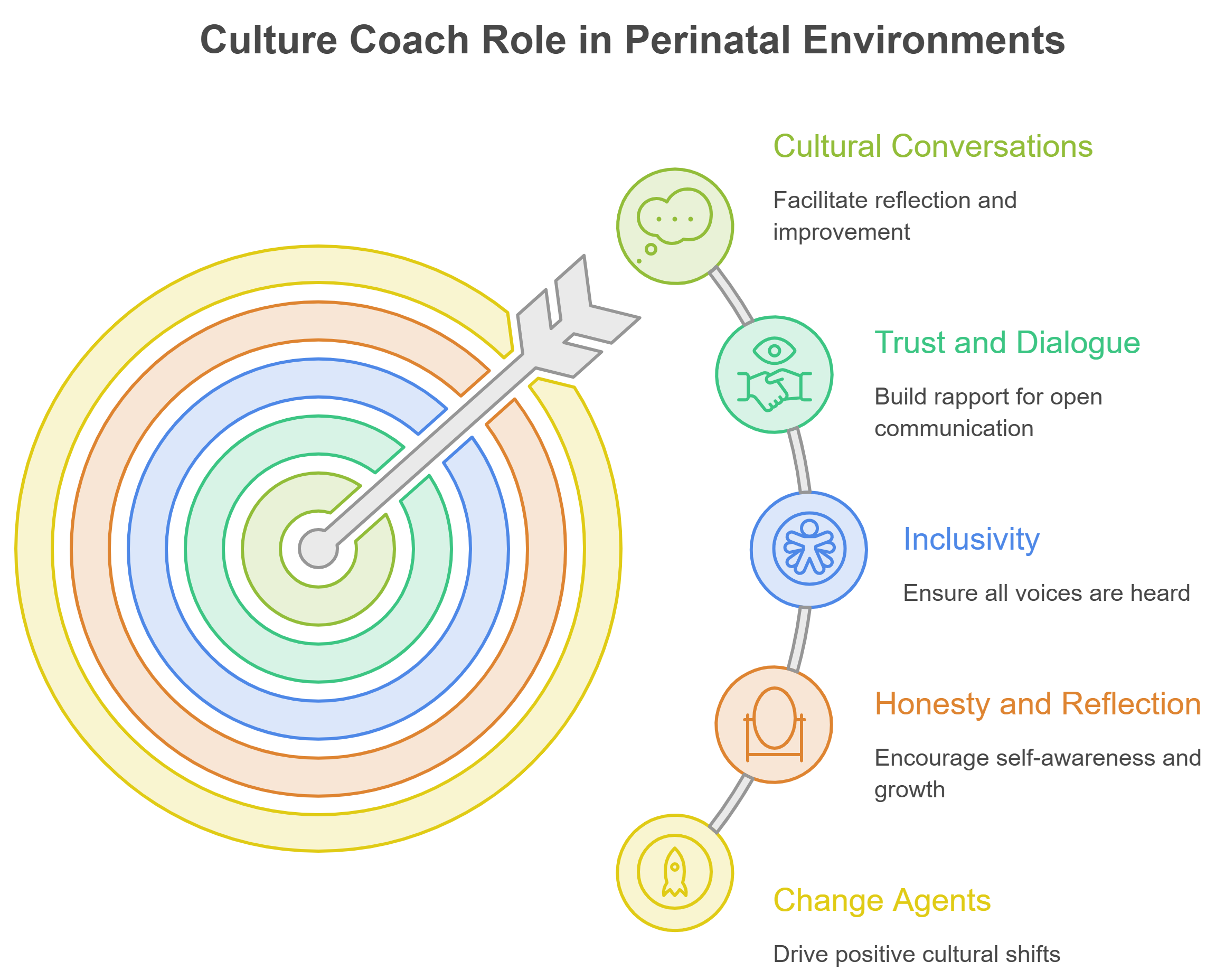
Culture Coaches have become an important part of the programme’s legacy. Their role is to create the conditions for honest, reflective and inclusive conversations about culture. They do not need to be the most senior person in a team. They need to be trusted, curious and able to support people to speak openly.
View the Culture Coach in perinatal environments graphic
Health Innovation West of England developed a local Culture Coach and MOMENTS train-the-trainer package. This helped organisations build internal capability so that cultural conversations can continue without relying on external facilitation.
The training supports Culture Coaches to:
- understand the link between culture, leadership and patient safety
- plan and facilitate cultural conversations
- use appreciative inquiry and coaching techniques
- manage group dynamics inclusively
- explore difficult topics such as hierarchy, bullying or racism
- use MOMENTS to identify strengths and improvement opportunities
- translate insight into local action
- train and support others in their organisation
Connecting culture with maternity and neonatal safety priorities
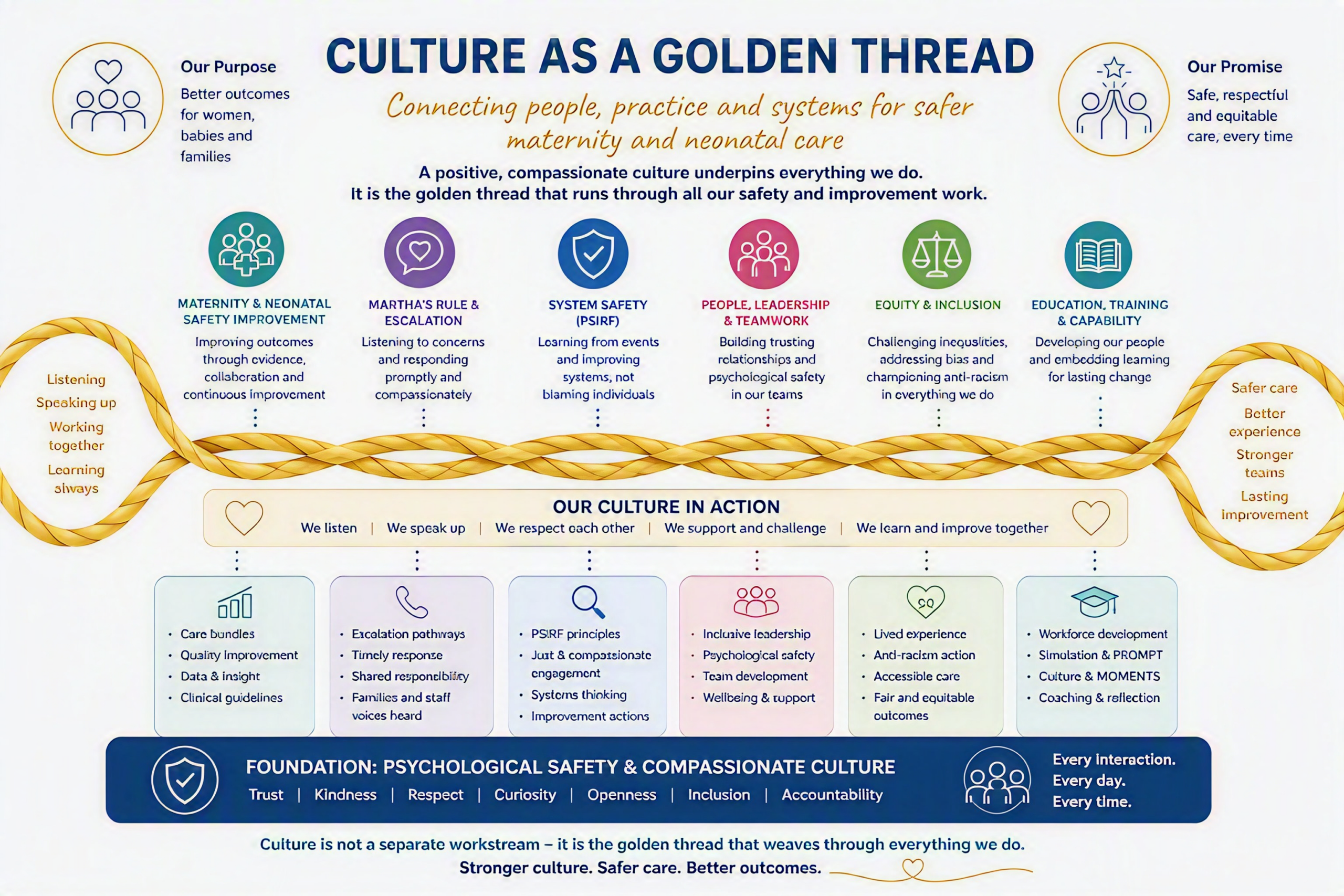
The programme has strengthened wider maternity and neonatal safety work by making culture a consistent thread across workstreams. This means culture is considered in how teams recognise risk, escalate concern, communicate under pressure, learn from events and support each other.
Culture work has been aligned with:
- the Maternity and Neonatal Safety Improvement Programme
- maternal and neonatal early warning and escalation work
- Avoiding Brain Injury in Childbirth
- perinatal deterioration and escalation
- cardiotocography interpretation and escalation
- Saving Babies’ Lives Care Bundle implementation
- perinatal optimisation
- quality improvement coaching and education
This alignment helps teams avoid duplication. It also supports Trusts to use culture improvement as part of routine governance, assurance and Board reporting.
View the culture as a golden thread graphic
Supporting Martha’s Rule and escalation
Martha’s Rule is closely linked to the principles of the Perinatal Culture and Leadership Programme. Both focus on listening, responding to concern, reducing hierarchy and creating the conditions where patients, families and staff can speak up.
The programme has supported this work by reinforcing the cultural conditions needed for timely escalation. These include psychological safety, clear communication, civility, shared accountability and confidence to act when something does not feel right.
The programme summary report highlights how Martha’s Rule, perinatal escalation and deterioration, and wider maternity and neonatal safety work are connected by the same cultural foundations: listening well, acting on concerns and learning together.
Find out more about our work the support local implementation of Martha’s Rule and managing deterioration workstreams.
Supporting System Safety and PSIRF
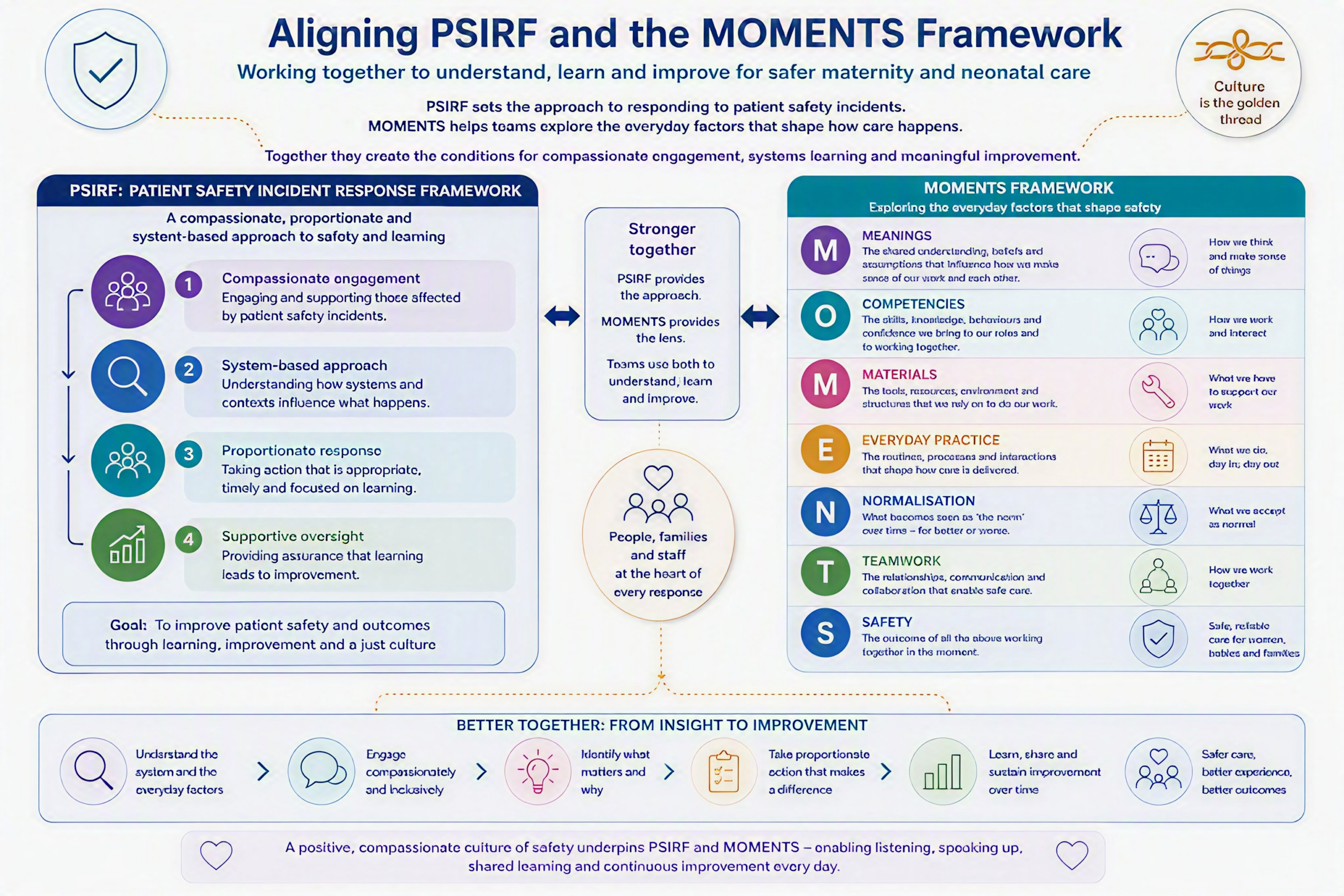
The programme has also supported implementation of the Patient Safety Incident Response Framework, known as PSIRF. PSIRF focuses on learning, improvement, compassionate engagement and systems thinking rather than blame.
View the PSIRF and MOMENTS alignment graphic
MOMENTS aligns strongly with this approach. It helps teams explore the wider system factors that shape care, including tools, resources, staffing, relationships, professional confidence, hierarchy and local norms.
In practice, this means culture conversations can support:
- After Action Reviews
- thematic learning responses
- team reflection after incidents or near misses
- quality improvement planning
- stronger links between frontline insight and governance
- more meaningful improvement actions
The programme has helped ensure culture is embedded within system-level safety management, rather than sitting alongside it as a separate improvement activity.
Equity and listening to women and families
Improving culture is also an equity issue. The programme recognised that women racialised as Black and Brown, and women from wider Global Majority backgrounds, are disproportionately affected by unsafe cultures in maternity and neonatal services.
The programme links closely with Black Maternity Matters and the Regional Perinatal Equity Network. These programmes support teams to examine racism, bias, power and communication in maternity care, and to translate learning into quality improvement.
Culture work supports equity by helping teams:
- listen to women and families more consistently
- recognise and respond to concerns earlier
- challenge bias and assumptions
- improve communication and escalation
- create more inclusive and respectful care environments
- use lived experience to shape improvement
Learning from local case studies
The programme has produced a range of local case studies and blogs showing how culture work can make a practical difference.
From Acorn to Oak: supporting newly qualified midwives
Great Western Hospitals NHS Foundation Trust introduced a dedicated Lead Preceptorship Midwife and structured preceptorship programme to improve support, wellbeing and retention for newly qualified midwives. Within 10 months, the 0 to 1 year leaver rate reduced from 13.8 percent to 1.3 percent, and the Trust moved into the national top decile for 12-month rolling turnover.
Embedding MOMENTS in midwifery education
Health Innovation West of England worked with the University of the West of England to embed MOMENTS into the Year 2 pre-registration midwifery curriculum. The session helps student midwives connect safety culture, leadership, reflection and quality improvement early in their professional development.
Building safety culture through PROMPT
Gloucestershire Hospitals NHS Foundation Trust integrated MOMENTS conversations into Practical Obstetric Multi-Professional Training, using emergency scenarios to explore communication, hierarchy, role clarity, escalation and team learning.
Community emergency skills training
Royal United Hospitals Bath NHS Foundation Trust worked with South Western Ambulance Service NHS Foundation Trust to strengthen community maternity emergency training. The project improved confidence, multidisciplinary working and shared understanding of roles during out-of-hospital emergencies.
What changed as a result
The programme has created a stronger foundation for ongoing culture and safety improvement across maternity and neonatal services in the West of England.
Key areas of impact include:
- stronger Board-level visibility of culture improvement work
- improved local capability through Culture Coaches
- increased use of structured, psychologically safe conversations
- wider use of MOMENTS in education, training and incident learning
- improved alignment between culture work and maternity safety priorities
- clearer links between culture, escalation, deterioration and system safety
- stronger regional and national sharing of learning
The programme has also helped position culture as a core part of safe care, rather than an additional task. This supports a shift from reactive incident response towards continuous learning and improvement.
Looking ahead
Although the formal Perinatal Culture and Leadership Programme has ended, its work continues through wider maternity and neonatal safety programmes, Martha’s Rule, PSIRF and system safety improvement.
The next phase will focus on sustaining and spreading the approaches developed through the programme. This includes continued use of Culture Coaches, MOMENTS conversations, local culture improvement plans and stronger links with escalation, deterioration and Board assurance.
By embedding culture work into everyday practice, teams can continue to strengthen the conditions for safer, more compassionate and more equitable care for women, babies, families and staff.
Resources
Reports and programme resources
- Perinatal Culture and Leadership Programme 2024 to 2026 summary report
- MOMENTS resources – CTG Escalation template, Perinatal deterioration template
- Culture Coach train-the-trainer resources
- Maternity Incentive Scheme alignment resources year 7 and year 8
- Teaming for Cultural Improvement in the NHS and Health Services poster
Blogs
- Breaking down barriers for safer systems
- Why safety culture needs more than policies
- Why Martha’s Rule matters
- Beyond the call: Martha’s Rule in action
- In conversation: Jan Scott, Senior Programme Manager, Patient Safety
For more information, please contact our patient safety team.
Please visit our events listings to find details of all patient safety events.
You can also stay up to date with our news and events by signing-up to receive our monthly newsletter.