Posted on October 29, 2025
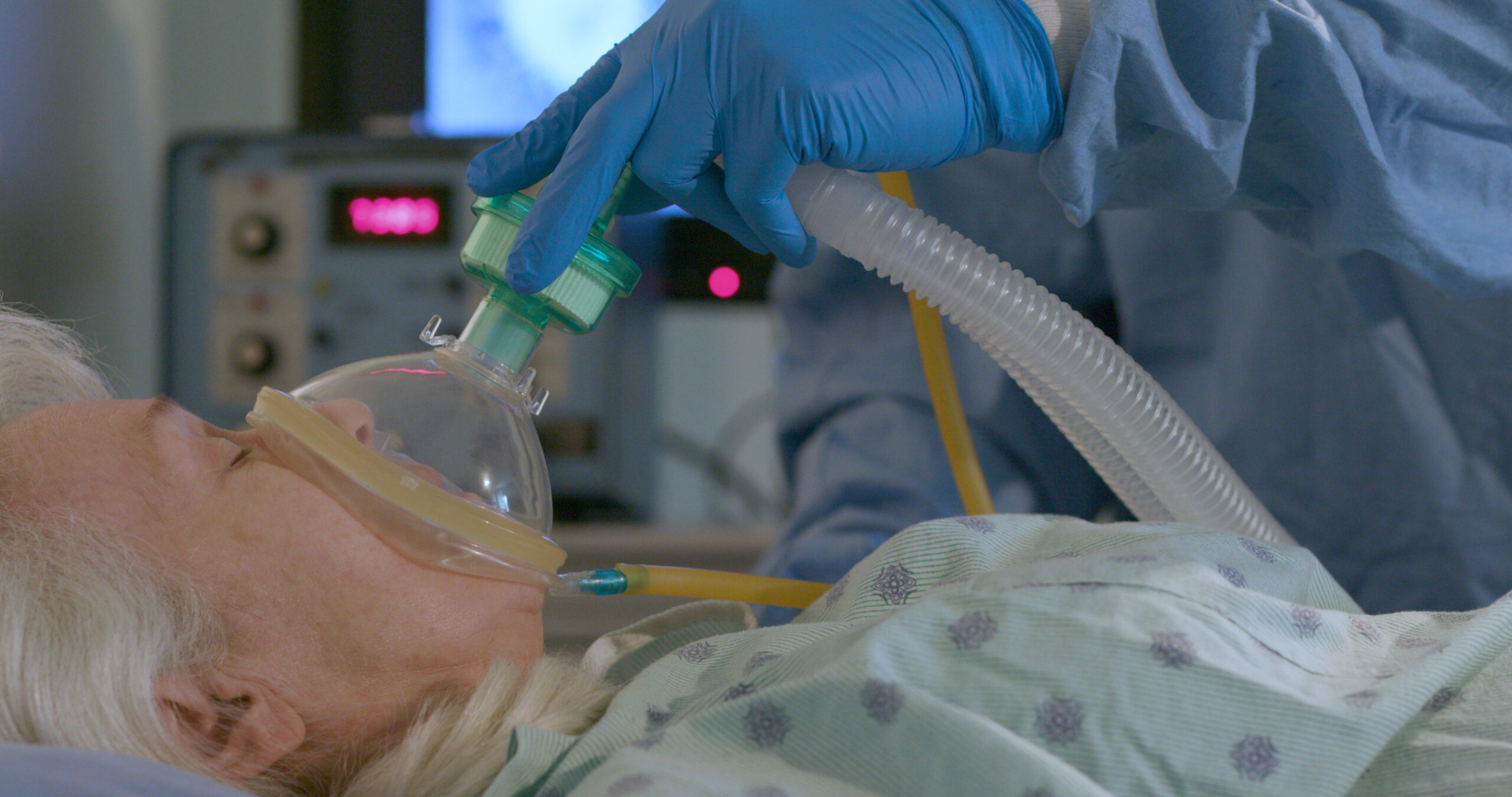
Our project to improve care for patients receiving acute non-invasive ventilation (NIV) has helped to reduce mortality rates from 28% to 22% across the West of England, and modelling shows this approach has saved 165 lives to date.
(NIV) services were developed in many UK hospitals after a clinical trial showed that it could reduce mortality in selected patients (with COPD exacerbation and type two respiratory failure) from 20% to 10%.
However, national audits run by the British Thoracic Society (BTS) between 2010 and 2013 showed progressively worsening outcomes from NIV delivered for acutely ill patients in NHS hospitals. A further BTS audit in 2019 showed a slight improvement but mortality rates in England remain higher than in many other countries at 26%. This is well above the mortality rate of the original NIV study that drove the service changes.
The challenge
Non-invasive ventilation (NIV) is used to support a patient’s breathing when they have type two respiratory failure. It helps to clear carbon dioxide more effectively from their body while also improving oxygen levels. NIV is most effective when started as soon as patients are found to need it. Evidence has shown that there are often delays in starting treatment and that the treatment is often delivered ineffectively and not monitored well.
Our approach
Through our Improving NIV Care programme, we successfully in introduced a standardised ‘NIV 5’ care bundle, based on the British Thoracic Society’s quality standards, using a collaborative approach across all six hospitals in the West of England – Great Western, Bristol Royal Infirmary, North Bristol, Royal United Hospitals Bath, Gloucestershire Royal and Weston General.
The project aimed to reduce mortality rates to 10% or lower for patients requiring acute NIV for Type II Respiratory Failure.
The Health Innovation West of England programme team used the Institute for Healthcare Improvement (IHI) breakthrough collaborative model to support the introduction of the care bundle. This included quality improvement (QI) methodology and tools to ensure that the right support was given to clinicians delivering this treatment.
“The Health Innovation West of England NIV 5 project has acted as a platform from which to reinvigorate acute NIV care within our trust. It has enabled open conversations about staff confidence and competence and empowered staff to ask questions and challenge existing processes, as well as delivering a sustained improvements in patient outcomes. The opportunity to work collaboratively with ED colleagues within our trust and stakeholders across the region has been fantastic and has made enduring changes to acute NIV management in our region.”
Becs Mason, Consultant Respiratory Physician at Royal United Hospitals Bath NHS Foundation Trust
Impacts to date
Mortality rates after implementation of the NIV 5 care bundle dropped from 28% to 22% across the West of England. Although this mortality rate is not a low as intended, it is below both the initial regional and currently reported national mortality rates. Modelling indicates that this approach has saved 165 lives to date.
Clinical colleagues from the participating trusts have established a network for sharing learning and resources. More widely, staff confidence has improved, as well as competence in the correct application of NIV treatment.
A project evaluation is exploring four key themes:
- To demonstrate whether mortality rates improve through the implementation of the NIV 5 care bundle.
- To understand whether staff confidence and competence improves from being part of the Improving NIV care project.
- To learn from patient experience in order to improve NIV care.
- To create standardisation of how NIV care is delivered by using a bundle, and to investigate which elements of the bundle work most effectively.
The evaluation report has been submitted for publication.
“This has been a great example of the impact that the Health Innovation Network can have. The project involved bringing together key stakeholders, enabling data collection with data sharing agreements, presentation and analysis of how the system was performing, and co-ordinating meetings both to inform and to motivate clinical teams. The opportunity to step outside of usual work patterns and to see things improve was inspiring for everyone involved.”
Mark Juniper, Medical Director for Health Innovation West of England
Start and end date
The programme launched in December 2024 and completed in autumn 2024.
Find out more
For further information about this project, visit Improving care for NIV patients or contact Susie Beresford, Senior Project Manager at Health Innovation West of England, susie.beresford@nhs.net.