Posted on March 10, 2026
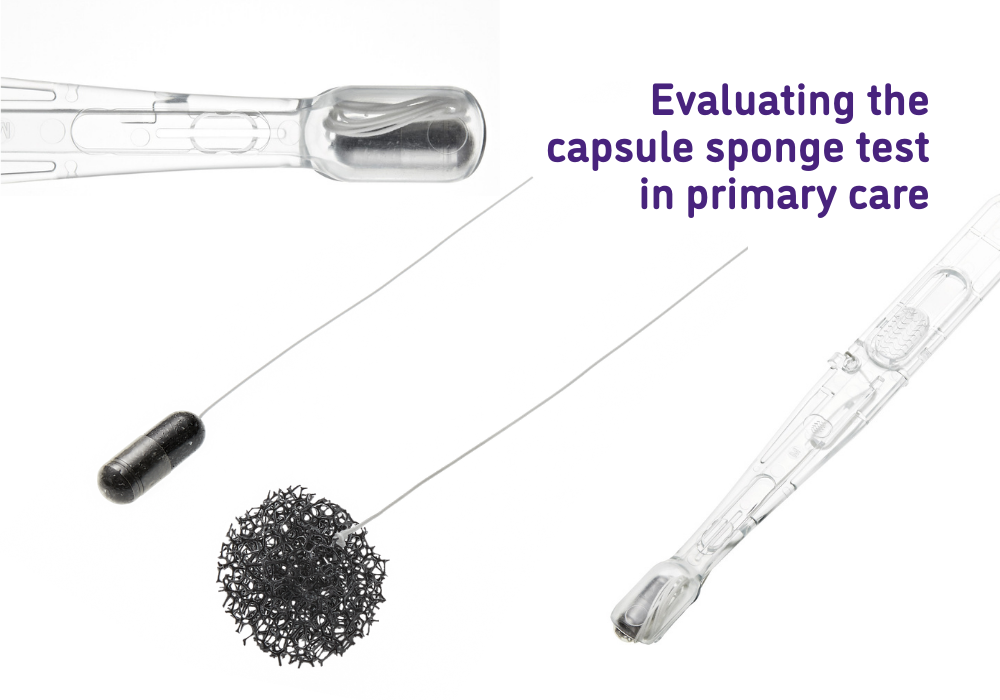
In partnership with the Somerset, Wiltshire, Avon and Gloucestershire Cancer Alliance, this pilot project evaluated the use of a minimally invasive capsule sponge test in primary care to improve the early detection of oesophageal cancer and Barrett’s oesophagus. By shifting diagnostics to GP practices, the initiative aims to catch the disease sooner and improve long-term survival rates while delivering care closer to home.
Challenge
Oesophageal cancer currently has the lowest proportion of early-stage diagnoses among all cancers in the UK, with only 20% of cases caught at stages 1 or 2.
Detecting the disease or its precursor, Barrett’s oesophagus, as early as possible is crucial to increasing long-term survival and reducing the risk of complications associated with advanced disease.
Approach
The capsule sponge test is a minimally invasive, non-endoscopic diagnostic method used to detect Barrett’s oesophagus and early-stage cancer in individuals with chronic reflux.
The procedure is completed during a short appointment at a patient’s GP practice.
In collaboration with the Somerset, Wiltshire, Avon, and Gloucestershire (SWAG) Cancer Alliance and Unity Insights, we evaluated an 11-month pilot of the capsule sponge test in primary care.
Results
The pilot demonstrated strong patient engagement and positive clinical outcomes. Of 579 eligible patients, 70% accepted the invitation and 52% successfully completed the test. Patient feedback was overwhelmingly positive, with 93% rating their experience as good or very good.
The test also proved effective at detection. Of the 301 patients tested, 70 required an endoscopy. 18 were diagnosed with Barrett’s oesophagus and 29 diagnosed with other conditions.
Staff valued the simplicity of the pathway and its ability to deliver care closer to home.
Find out more
Read the full evaluation report here.
Find out more about our partnership with the SWAG Cancer Alliance.