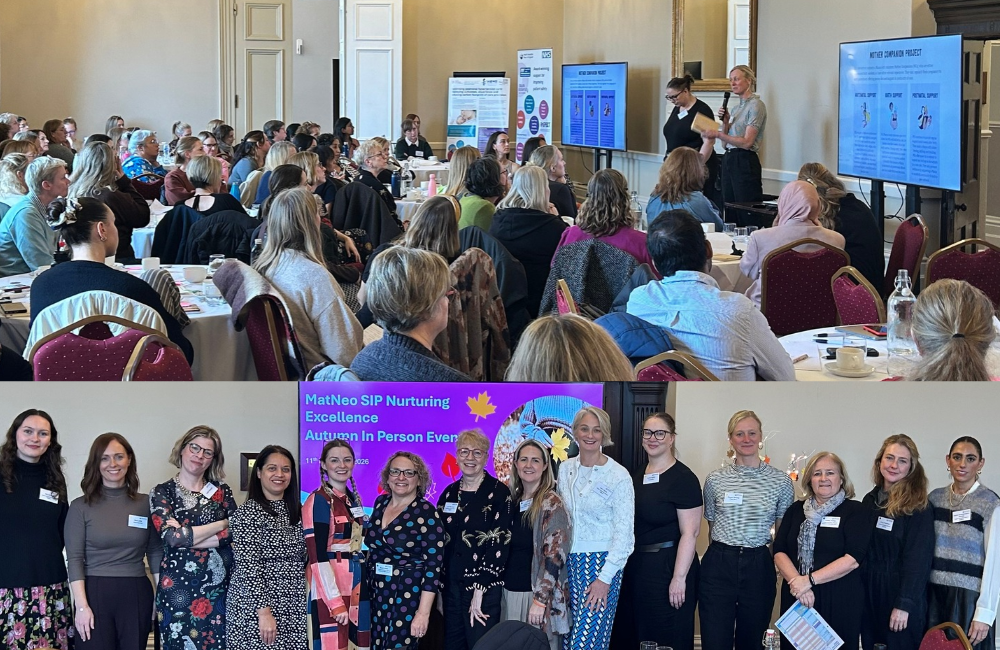
Maternity and neonatal teams from across the West of England came together in Bristol last week to share new approaches to improving safety, reducing inequalities and delivering better care for women, babies and families.
The Nurturing Excellence autumn event, hosted by Health Innovation West of England on 11 November, brought together perinatal professionals to celebrate progress, share learning and explore practical innovations that can make a difference to care.
The event highlighted the impact of the national MatNeo Safety Improvement Programme work locally and nationally. Figures shared on the day showed that an estimated 629 cases of cerebral palsy have been avoided nationally since April 2018, while evidence-based interventions for preterm birth may have helped more than 2,100 additional babies survive.
Through the Avoiding Brain Injuries in Childbirth programme, impacted fetal head training has been rolled out in four out of five of our hospital trusts in the West, with another going live this month with a simulation.
How new ideas are changing practice
The South West Neonatal Operational Delivery Network shared progress from its Cuddle Bundle, which aims to keep mothers and babies together through increased skin-to-skin contact and greater involvement of families in care. Early evaluation has seen delivery room cuddles rise from 43% to 71%, parent involvement in procedures increase from 79% to 100%, and average daily skin-to-skin contact increase from 4.6 to 6.4 hours.
Innovation was also put into practice during the day through Spin4Sim, an approach developed by anaesthetist Lucy Whitton to make simulation training easier to deliver regularly within busy clinical environments. Delegates took part in seven different clinical scenarios in multidisciplinary teams, with participants taking ideas back to their own organisations.
Culture and communication
But technology and clinical practice were only part of the conversation. A recurring theme throughout the event was the importance of culture, communication and creating environments where staff and families feel able to speak up.
Author and midwife Leah Hazard explored how small actions can help create positive cultural change during even the busiest shifts, from checking in with colleagues to creating opportunities for conversation and reflection.
Sara Jelfs, PROMPT Wales National Midwife, explored why escalation should be seen as a chain of events rather than a single conversation. She highlighted barriers including hierarchy, fear of judgement and workload pressures, and discussed practical approaches such as SBAR, safety huddles, clear escalation pathways and closed-loop communication.
The central message was clear: recognising a concern is only the first step. Creating the culture and systems that ensure concerns are heard and acted upon is what makes escalation effective.
Delegates also heard from Emily Carter and Connie Ramsay from Project MAMA about the inequalities and challenges faced by mothers seeking asylum during pregnancy and after birth. They shared how Project MAMA provides advocacy and practical support in Bristol, including the story of one mother whose experience had been transformed by that support.
Other discussions included progress in implementing Martha’s Rule across maternity, neonatal and emergency care, giving patients, families and staff clearer routes for escalating concerns when they believe someone’s condition is deteriorating.
The day ended with reflections on compassionate leadership, psychological safety and the importance of listening to women, families and staff.
Energising conversations
Participants described leaving the event energised by the conversations and connections they had made.
One attendee said: “It was a great day. I came away feeling positive and buoyed up – my metaphorical midwifery teaching cup has been refilled.”
Jane Clarke, Senior Programme Manager for Patient Safety, added: “It was the first time I have had the privilege of attending this inspiring event. The enthusiasm, commitment, realism and strong connection demonstrated with families and their babies was really moving… There was great energy in the room.”
Find out more about our Maternity and Neonatal Safety Improvement Programme.
Posted on November 18, 2026
Case studies you may like

Home monitoring for expectant and postnatal parents
The HOME (HOme Monitoring for Expectant and Postnatal parents) project is a digital remote blood pressure monitoring service, designed to improve the safety and convenience of care for women at risk of hypertension during and after pregnancy. Following its success at Great Western Hospitals, this initiative has been rolled out across the West of England…
Read more
A real-world evaluation of the Hegenberger Retractor
In partnership with Royal United Hospitals Bath NHS Foundation Trust, we carried out a real-world evaluation of the use of an innovative device, designed to improve recovery for women and birthing people after childbirth. The study explored how the Hegenberger Retractor was used in practice, its impact, and the barriers and enablers influencing its adoption.…
Read more
PERIPrem (Perinatal Excellence to Reduce Injury in Premature Birth)
Launched in April 2020, PERIPrem (Perinatal Excellence to Reduce Injury in Premature Birth) is a unique perinatal care bundle that aims to improve the outcomes for premature babies across the West and South West regions. PERIPrem reflects the NHS Long Term Plan ambition to reduce stillbirths, maternal and neonatal mortality and serious brain injury by…
Read more