As the year draws to a close, it’s traditional to take stock and reflect on what we’ve achieved together before we launch ourselves into the new year.
2025 has been another year of collaboration, innovation, affirmation and impact – all the more extraordinary considering the challenges the NHS community is currently facing. This year, we have continued to deliver on our shared commitment to improving outcomes for everyone in our local communities across the West of England.
Here are some of our team’s highlights from the last 12 months…
Voices for change: Hearing the voices of young people with bowel and bladder conditions
Back in February, we partnered with ERIC, The Children’s Bowel & Bladder Charity, to publish an important insights report, revealing that nearly half of young people surveyed said they were not allowed to use the toilet during lessons, while a quarter said they were scared to use the toilets at school.
Anti-social behaviour around school toilets is causing many schools to shut them during lesson times. Shame and stigma around toileting are causing many young people to avoid drinking water during the day so they don’t need to go at school. The embarrassment and shame surrounding continence problems mean that many young people and their families suffer in silence with no one to turn to.
ERIC and Health Innovation West of England commissioned a survey to investigate the issue and open a dialogue with young people, schools, and local authorities to tackle the problems identified.
The research was conducted by ERIC’s Young Champions, a group of young people aged 12 – 19 from across the UK with lived experience of bowel and bladder conditions. They were recruited, trained and supported by Participation People, a team of youth engagement, participation and co-production experts working across the UK.

Young people’s voices aren’t often heard on the subject of school toilets. The ERIC Young Champions have done amazingly well to capture such rich and expansive survey data from young people. We have been told, loud and clear, that change is desperately needed.
Siân Wicks CEO of ERIC, The Children’s Bowel & Bladder Charity
Read moreBlack Maternity Matters wins national award
In March, members of the Black Maternity Matters collaborative celebrated scooping the award for ‘Community Project Impact’ at the prestigious Black Maternal Health Awards UK 2025.
Held in London on Saturday 22 March to celebrate excellence across maternal healthcare, The Black Maternal Health Awards were hosted by The Motherhood Group. Black women in the UK remain more likely to experience serious maternal health and mental health complications. These awards have been established to recognise the dedicated individuals and organisations working hard to transform these statistics.
Our Black Maternity Matters training and education programme is supporting perinatal teams to reduce the inequitable maternity outcomes faced by Black mothers and their babies.

To be recognised in this way is deeply affirming – not just for the work we’ve done, but for the work still to come. Black Maternity Matters because our lives matter. Our births matter. Our stories matter. To everyone who’s been part of this journey, this award is for us.
Aisha Thomas Director of Representation Matters
Read morePioneering child-parent screening pilot identifies families at risk of inherited heart disease
A new evaluation was published this year demonstrating the impact of the Health Innovation Network’s pilot Child Parent Screening Service (CPSS) to help the NHS detect cardiovascular disease earlier by identifying children and families with familial hypercholesterolaemia (FH).
Health Innovation West of England played a key role in the success of the CPSS pilot, with a third of the national total of screenings being completed here in our region. These efforts have helped shape the CPSS model for national rollout.

Being part of the CPSS in the West of England has been hugely rewarding and it was fantastic as a lipid specialist for our area to be part of this innovative piece of work. We showed that, with the right training and support, child-parent screening can be seamlessly integrated into routine immunisation visits.
Dr Paul Downie Clinical Lead for CPSS and Consultant Chemical Pathologist
Read moreFit for the future: 10 Year Health Plan
In July, we welcomed the Government’s publication of its 10 Year Health Plan for England, outlining how it will transform the NHS through three strategic shifts: hospital to community, analogue to digital and sickness to prevention.
We were pleased to see the focus on innovation and AI, expansion of the NHS App and the commitment to a single patient record, all of which will involve innovation partnerships to deliver change to local services, that will have a national impact.
The Plan recognised the important work of the 15 health innovation networks across England and we are now operationalising these plans to continue working with our partners to find, test and implement at scale innovations that improve patient outcomes, increase NHS productivity and reduce waiting lists, while delivering economic growth.

In the coming months and years, we look forward to playing our part in helping to realise these shared ambitions and we will continue to act as crucial connectors and facilitators, collaborating with diverse partners and bridging the gap between researchers, industry and NHS partners, to support the adoption and spread of proven innovations and transform to new ways of working.
Natasha Swinscoe Chief Executive, Health Innovation West of England
Read moreLaunch of seven innovation projects to drive earlier and faster cancer diagnosis
In partnership with the NHS Somerset, Wiltshire, Avon and Gloucestershire (SWAG) Cancer Alliance, we have launched seven pioneering innovation projects aimed at transforming cancer diagnosis across the region.
Funded by the NHS SWAG Cancer Alliance as part of our joint Cancer Innovation Programme, we selected these projects through a competitive open call and are designed to accelerate earlier and faster cancer diagnosis across our region, with a strong focus on cutting-edge technologies and addressing health inequalities. We prioritised projects targeting tumour sites with high rates of late-stage diagnosis, such as oesophageal, lung, pancreatic, and non-Hodgkin’s lymphoma, and those addressing health inequalities in underserved populations.

These projects represent a really exciting step forward in our journey to improving early diagnosis and treatment of cancer. They demonstrate the commitment and the power of collaboration in striving to improve outcomes for patients across our region and we’re hopeful that their evaluation will show real potential to make a meaningful difference.
Becky Clack Cancer Innovation Programme Manager for Health Innovation West of England
Read moreNew digital app enhances communications between clinicians, patients and families in Bristol pilot
A real-world evaluation, commissioned by Health Innovation West of England and conducted by Unity Insights, revealed the positive impact of Clera, a web-based messaging application, on communication between healthcare staff, patients, and their families.
The small-scale pilot, conducted in the Infectious Disease Unit at North Bristol NHS Trust (NBT), demonstrated Clera’s potential to foster greater transparency and trust within acute care settings.
Developed by NHS doctors Jonathan Abeles and Alice Appleton, Clera has been designed to address these issues by enabling healthcare professionals to securely message patients and their families, aiming to improve patient involvement, ensure more equitable communication, and optimise staff time.

Clera was born from our daily frustrations on the wards – families lacked updates, and staff lacked time. It’s a project shaped by our experiences as doctors, but having the idea was the easy part. Finally seeing it being used by our colleagues on the wards we used to work on was a huge milestone for us.
Dr Alice Appleton Co-Founder and Director of Clera
Read moreLEAP’s festival of digital health
In the summer we were delighted to partner with the Health Tech Hub and Future Space to run a day-long session as part of the LEAP Digital Health Hub’s festival of digital health.
In the morning, we heard from teams developing and commissioning digital health solutions in primary, secondary and community settings. They shared their stories of success, as well as the challenges and frustrations they’ve faced and how they’ve overcome these – or indeed might still be tackling.
In the afternoon, colleagues from our Academy ran a fun, interactive, and productive (in equal measure!) workshop on design thinking, encouraging everyone to collaborate on ideas that promote digital inclusion rather than exclusion.

The co-design workshop was a fantastic way to close the day - offering a chance to meet passionate changemakers, hear diverse perspectives, and collaborate on digital solutions that could tackle some of healthcare’s most complex problems.
Alejandra Anderson Jiménez Senior Usability Designer, Crux Product Design
Read moreEmpowering patients and upskilling clinicians to tackle overprescribing
The Polypharmacy: Getting the Balance Right programme, which we led on behalf of the national Health Innovation Network, has successfully engaged with over 12,000 healthcare professionals to support them with the skills and confidence to tackle overprescribing, delivered 124 communities of practice across the country, and co-developed vital resources to empower patients in conversations about their medicines.
This autumn, the Polypharmacy programme drew to a close, leaving a strong legacy. It has raised national awareness of problematic polypharmacy, provided practical tools for change, and demonstrated that this complex issue is not insurmountable. We published a suite of reports highlighting the programme’s transformative impact on patient safety and clinical practice across England.

This work has been developed, delivered and evaluated by the Health Innovation Network and is starting to show how, by taking this three pillar approach, we can identify patients at risk from harm and improve the quality of Structured Medication Reviews to ensure that patients, but particularly our older people, are only taking the medicines that they need.
Clare Howard Pharmacist and National Clinical Lead for the Polypharmacy Programme
Read moreAssessing the economic and environmental implications of UniWee™
Developed by nurses in the Emergency Department at Great Western Hospitals (GWH) NHS Foundation Trust, UniWee™ is an innovative device that has been commercialised in collaboration with Omni-Pac to provide female patients who are unable to walk with a dignified, pain-free way to urinate whilst sitting or lying down.
As part of our support to the team at GWH, Health Innovation West of England commissioned Unity Insights to produce a cost-benefit analysis tool and high-level carbon impact analysis of the UniWee™ in the neck of femur pathway in the average NHS hospital in England. This project involved creation of an interactive tool and a high-level evaluation report.
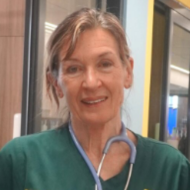
This cost-benefit model, designed by Unity Insights and funded by Health Innovation West of England, will be invaluable in supporting our further work to demonstrate that this innovation supports sustainability in the NHS as well as being a better option for patients and staff.
Dr Siân Thomas Emergency Doctor at Great Western Hospitals NHS Foundation Trust
Read moreShowcasing South West health innovation at the Houses of Parliament
In October, we joined colleagues from the GW4 Alliance at a special ministerial reception to celebrate the region’s world-class research and innovation ecosystem.
Sponsored by Claire Hazelgrove MP (Filton and Bradley Stoke), the event brought together over 150 guests from across policy, academia, funding bodies, civic leadership, and industry.
We attended as part of the South West Health and Life Sciences Cluster Development Initiative, alongside GW4, South West Life Sciences, and Health Innovation South West.
Having engaged with stakeholders from across the region, we recognise the potential for a formalised Health and Life Sciences cluster to advocate for the South West via one unified voice to help attract inward investment. We are working with stakeholders to co-produce structured proposals that articulate a collective vision for the operationalisation of a formal cluster.

I was struck by the passion of the researchers, whose work is already making a real difference from developing more energy efficient housing and improving mental health and wellbeing. They are also laying the foundations for a formal life sciences cluster for the South West of England and South Wales that will help attract further investment, boost economic growth, and drive innovation across the NHS.
Claire Hazelgrove MP for Filton and Bradley Stoke
Read moreEight innovators join the second cohort of our Commercialisation Academy
This autumn, we were delighted to welcome eight companies onto the second year of our West of England Commercialisation Academy, designed to support health and care innovators whose products and services offer potential for wider adoption and scale.
Run in partnership with Triple Chasm, the eight-week programme will help each of the companies to develop their strategic commercialisation plans. The programme is based on the Triple Chasm Model®, which provides a holistic data-driven framework built on research into around 3,000 products taken to market.

The Commercialisation Academy particularly appeals because I believe it's for people like us that have gained a lot of experience and have gained some traction in the NHS. But it's a bit of a challenge selling into the NHS nowadays. So it's how can we shape our proposition, that we know is really beneficial for patients, but getting the funding attached to it so that as many people as possible can benefit from getting the right diagnosis.
Cara Oliver Lead for Specialist Services, Nuvoair
Launch of new animation to explain and promote Martha’s Rule
And in December, we were delighted to launch a new animation we’ve developed in partnership with all the maternity trusts across the West of England about the Martha’s Rule patient safety initiative.
Aimed at both members of the public and healthcare professionals, the short four-minute film summarises Martha’s Rule, which is being piloted across 143 sites in England. Martha’s Rule provides a clear, formal way for patients, their families and staff to raise any concerns, ensuring they are listened to and acted upon.

I’m really proud of this new animation, which I hope will support staff, patients and their families to understand and, if needed, use Martha’s Rule as the vital safety net it is intended to be.
Siobhan Lanigan Senior Project Manager, Health Innovation West of England
Watch herePosted on December 17, 2025
Blogs you may like
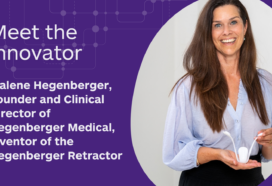
How the Hegenberger Retractor supports careful, dignified postnatal repairs
For perineal specialist midwife Malene Hegenberger, a challenge encountered repeatedly in practice became the starting point for a new innovation in postpartum care. After finding it difficult to achieve a clear view and maintain access when examining and repairing perineal tears following childbirth, Malene developed the Hegenberger Retractor, a device designed to gently hold tissue…
Read more
Empowering pharmacists for healthier futures
To mark World Pharmacist Day on Friday 25 September 2026, Rosie Marchant, Pharmacist Clinical Lead at Health Innovation West of England, reflects on her career as a pharmacist, her journey to becoming Clinical Lead for our work as part of the Health Innovation Network’s on-going cluster, Preventing Problematic Polypharmacy, and how the programme is helping…
Read more
Health innovation in action
Marking the publication of Health Innovation West of England’s new impact report for 2025-26, our Chair and Vice-Chancellor of the University of the West of England, Steve West, and our Chief Executive, Natasha Swinscoe, reflect on a year of transformative progress in embedding innovation into everyday care. Over the past year, Health Innovation West of…
Read more