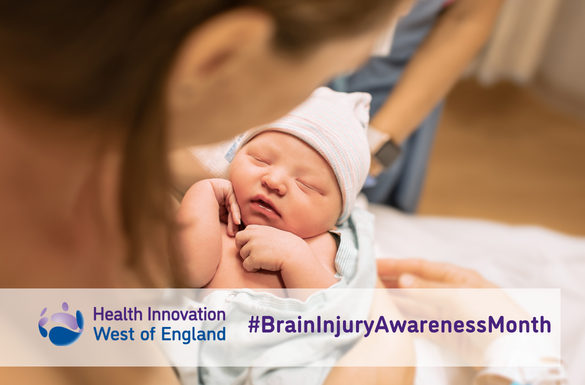
As the UK marks Brain Injury Awareness Month, organisations across the health and care system are highlighting the importance of preventing brain injuries and improving support for those affected.
Brain injuries can occur in many ways, including around the time of birth. One rare but serious condition is hypoxic-ischemic encephalopathy (HIE), which occurs when a baby’s brain does not receive enough oxygen and blood flow during pregnancy, labour or shortly after birth.
HIE affects around 1–3.5 in every 1,000 births in the UK. While uncommon, it remains one of the most serious complications that can occur around the time of birth. Preterm babies born before 37 weeks are at greater risk because their brains and circulatory systems are less developed and may be less able to cope with the stresses of labour. However, there are many possible causes of HIE during pregnancy or birth.
The condition is a leading cause of neonatal death, long-term disability and cerebral palsy, and the emotional, social and financial impact for families can be lifelong.
National action to improve maternity safety
To help reduce the risk of brain injury at birth and improve outcomes for babies, NHS England has introduced a number of national initiatives aimed at strengthening maternity safety.
These include the Saving Babies’ Lives Care Bundle, first introduced in 2018, which focuses on reducing stillbirths and improving fetal monitoring. Now in its third version, the programme aims to reduce stillbirth, HIE and neonatal death.
More recently, the Avoiding Brain Injury in Childbirth (ABC) programme was launched in 2025. The programme focuses on improving the management of complex situations during labour and birth, including standardising the approach to managing an impacted fetal head during caesarean birth, when a baby becomes deeply engaged in the pelvis and requires specialist manoeuvres to deliver safely.
The programme also supports maternity teams to recognise and respond quickly to signs of fetal deterioration during labour through training and the use of a standardised risk assessment tool.
Supporting maternity teams across the West of England
Health Innovation West of England is working with NHS trusts across the region to support the rollout of the ABC programme and strengthen maternity safety practices.
The organisation is coordinating training for healthcare professionals and supporting maternity teams to implement the programme locally. At the end of January, Health Innovation West of England hosted the regional launch of the maternity safety training programme, bringing together maternity professionals from across the region to share learning and support safer childbirth practices.
So far, 46 key professionals across the West of England have received train-the trainer training in impacted fetal head management, equipping them with the specialist skills needed to respond to these rare but critical situations and to be able to disseminate training to their local teams. Later this summer, further training will be delivered to help maternity services introduce education and support for recognising and managing intrapartum fetal deterioration.
Angela Willis, Senior Project Manager at Health Innovation West of England, said:
“Although hypoxic-ischaemic encephalopathy at birth is rare, its impact can be devastating for babies and their families. By working together with maternity teams across the West of England, we can support the adoption of evidence-based training and tools that help clinicians recognise risks earlier and respond quickly when complications occur.
Initiatives like the ABC programme are an important step in strengthening maternity safety and ensuring every baby has the safest possible start in life.”
A shared commitment to safer starts for every baby
Brain Injury Awareness Month is an opportunity to raise awareness of the causes and impact of brain injury while highlighting the importance of prevention and early intervention.
Through national programmes and regional collaboration, the NHS continues to work towards improving maternity care and reducing the risk of serious complications at birth.
While HIE remains rare, sustained national commitment, combined with local improvements in maternity and neonatal care, can help ensure that every baby in the UK has the safest possible start in life.
Posted on March 10, 2026